Contractor landing pages: what turns visitors into requests
What a contractor landing page does for your business
A contractor landing page is the web page a potential customer reaches after clicking a search result, an ad, or a social media post. Unlike a general website homepage, this page is built for a single purpose: to convince the visitor to take a specific action, such as requesting an estimate, calling your office, or filling out a contact form. For contractors, the difference between a page that converts and one that does not often comes down to how well it addresses the visitor's immediate needs and concerns.
When someone searches for a roofer, plumber, or electrician, they usually have a problem that needs solving quickly. They may be dealing with a leak, a broken furnace, or a remodeling project that has stalled. The landing page that speaks directly to that problem, shows you understand it, and makes it easy for them to take the next step, will win the job more often than a generic page about your company's history.
Why contractor landing pages need a different approach
Contractors face a unique set of challenges online. The customer journey often starts with urgency, moves through comparison shopping, and ends with a decision based on trust and availability. A landing page that converts well must guide the visitor through that journey without friction. That means clear messaging, obvious next steps, and content that answers the questions running through the visitor's mind.
One of the biggest mistakes contractors make is treating their landing page like a brochure. They list services, add a photo of their truck, and hope the phone rings. A high-converting page, on the other hand, is built around the visitor's search intent. If someone types "emergency plumber near me" into Google, they do not want to read about your company's founding story. They want to know you can arrive soon, what you charge, and how to get you there. The page must deliver that information fast.
Elements that boost conversion rates
Clear, action-focused headlines
The headline is the first thing a visitor sees. It should state what you offer and what the visitor can get. For example, "24-hour emergency plumbing in Des Plaines" or "Free estimate for roof repair" tells the visitor exactly what to expect. Avoid clever or vague headlines. The visitor should know within seconds whether they are in the right place.
Strong call-to-action buttons
Every landing page needs a clear call-to-action. For contractors, the most effective calls-to-action are those that match the visitor's intent. If the visitor needs immediate help, a button that says "Call now" with a clickable phone number works best. If the visitor is researching, a button that says "Get a free estimate" or "Book a consultation" can work well. The button should stand out visually and be placed where the visitor can see it without scrolling too far.

Trust signals and social proof
Contractors rely heavily on trust. A landing page that includes reviews, ratings, or testimonials from past customers can make a big difference. Even a short sentence like "Serving Des Plaines since 2010" or a few star ratings from Google can reassure a hesitant visitor. Licenses, insurance information, and membership in trade associations also help build credibility.
Relevant images and video
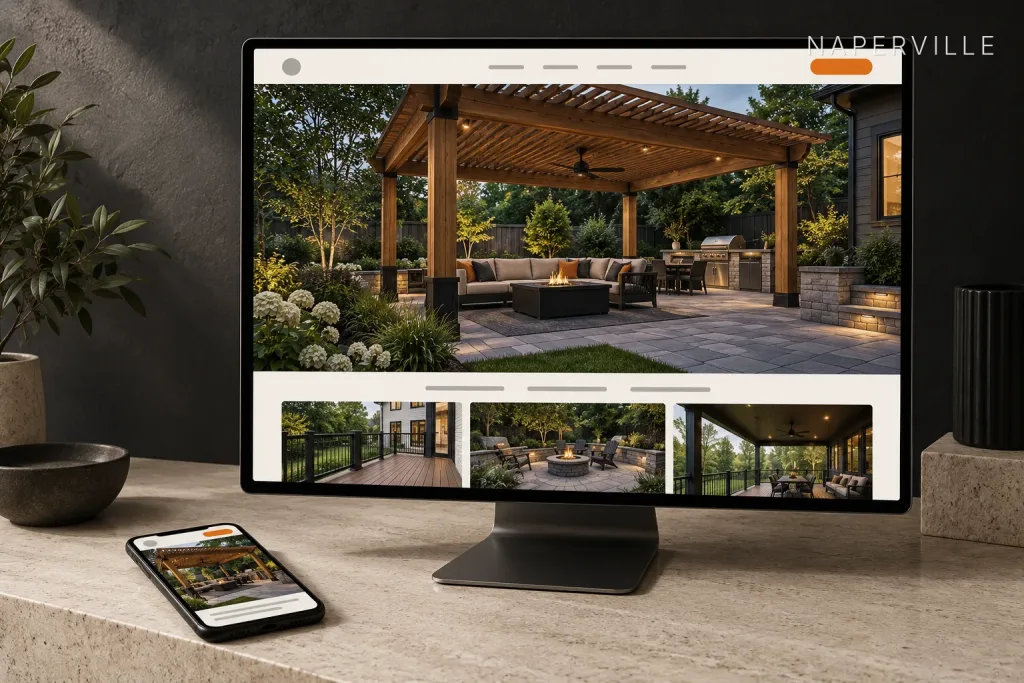
Photos of completed projects, before-and-after shots, or a short video of a contractor explaining a common problem can show competence and attention to detail. However, the images should be relevant to the service the visitor is looking for. A picture of a finished kitchen remodel helps someone looking for a kitchen contractor, but it may confuse someone who needs a sewer line repair.
How to match content to the customer journey
Not every visitor to a landing page is ready to hire. Some are in the early research phase, comparing options and learning about costs. Others have a clear problem and want a solution immediately. A well-designed landing page can serve both types of visitors by offering different paths. For example, a page could include a section that answers common questions, such as "How much does a new water heater cost?" or "How long does a roof replacement take?" and then offer a clear call-to-action for those ready to move forward.
This is where the concept of search intent becomes important. If a contractor targets a keyword like "water heater repair Des Plaines," the landing page should focus on water heater repair, not on all the other services the contractor offers. The more specific the page, the more likely it is to convert. General pages that try to cover everything often end up converting nothing well.
Lead qualification: why it matters on a landing page
Not all leads are worth pursuing. A landing page that attracts unqualified visitors, such as people who are not in your service area or who have a budget far below your minimum, can waste time and money. The best contractor landing pages include subtle qualification elements. For instance, a form that asks for the project zip code can filter out visitors who are too far away. A question about project timeline can help you prioritize urgent jobs over distant future projects.
Qualification does not mean putting up barriers that scare away good leads. It means asking the right questions early so that both you and the visitor save time. A visitor who is serious about a project will not mind answering a few simple questions if they know it leads to a faster, more accurate response.
Service area pages and local relevance
For contractors who serve a specific region, like those working within 25 miles of Des Plaines, Illinois, the landing page should reflect that service area. Mentioning the towns or neighborhoods you serve helps with local search engine visibility and reassures the visitor that you can actually get to their job site. A visitor from Arlington Heights is more likely to call a contractor who lists Arlington Heights as a service area than one who only says "serving Chicagoland."
Local relevance also extends to the language used on the page. Mentioning local landmarks, weather conditions, or common home issues in the area can make the page feel more personal and trustworthy. For example, a roofer in Des Plaines might mention ice dams, heavy snow, or summer storms, all of which are relevant to local homeowners.
Call tracking and measuring what works
One of the advantages of a dedicated landing page is that you can measure its performance. Call tracking, for instance, lets you know which pages generate the most phone calls. If you have multiple landing pages for different services, you can compare their conversion rates and see which ones need improvement. This data helps you refine your approach over time, rather than guessing what works.
A contractor marketing company can help set up these tracking systems and interpret the data. But even without outside help, a contractor can start by using a simple spreadsheet to track which pages get the most calls or form submissions. Over time, patterns emerge. You may find that pages with a video convert better, or that pages with a free estimate offer get more inquiries.
Ultimately, the goal is to create marketing that brings contractors qualified leads without wasting budget on clicks that never turn into jobs. A well-optimized landing page is one of the most cost-effective tools for achieving that. When done right, it acts as a filter, attracting the right visitors and guiding them smoothly toward a conversation.
What to avoid on a contractor landing page
Some common pitfalls can hurt conversion rates. Avoid cluttered layouts that distract the visitor. Too many buttons, links, or images can cause decision paralysis. Keep the design clean and focused on one primary action. Also avoid generic stock photography that does not represent your actual work. Visitors can tell when a photo is not real, and it damages trust.
Another mistake is hiding the contact information. The phone number and a simple contact form should be easy to find, ideally above the fold and repeated at the bottom of the page. If a visitor has to hunt for a way to reach you, they may leave and call a competitor instead.
Finally, avoid making the page too long without a clear structure. While some services require detailed explanations, most contractor landing pages perform best when they deliver the key information quickly and then offer a next step. A page that rambles or buries the call-to-action will frustrate visitors.

Putting it all together
A contractor landing page that converts well is one that respects the visitor's time and intent. It states the service clearly, builds trust with relevant proof, and makes the next step obvious. It qualifies leads early to save time on both sides, and it reflects the local area the contractor serves. The result is marketing that brings contractors qualified leads ready to move forward.
Lemur Marketing is also on YouTube.
For contractors in the Des Plaines area and surrounding communities, getting the landing page right can mean the difference between a steady stream of calls and a website that sits unused. Whether you build the page yourself or work with a specialist, the principles remain the same: clarity, relevance, and ease of action.
Lemur Marketing, located at 1574 Henry Ave, Des Plaines, IL 60016, USA, can be reached at +1 630-551-8493 for those interested in learning more about contractor marketing services.